
Sun's out, shorts on! Save on our bestselling range of Canterbury Harlequin Shorts by building your own bundle. Mix & match across core and Limited Edition styles for big savings.


Looking for the short answer? The best fleece for farming is a heavyweight (280 GSM+) anti-pill polar fleece with a YKK zip, a dropped hem and a high collar. Anything thinner is a layer, not a workhouse. Read on for why, and how to spot the duds.
Finding the Best Fleece for Farming
In a marketplace flooded with too much choice, it can feel like a full-time job to find a fleece that survives farm life. Here at Sugar Loaf, we've spent six years curating our range of farm workwear to bring the very best of the best to UK farmers, and beyond.
All to often, fleeces sold to farmers can leave you questioning the quality. We know there's nothing worse than replacing a fleece sooner than you should:
- Fleeces going bobbly (pilling)
- Thin layers that leave you shivering at the slightest breeze
- Stitching coming undone when it shouldn't
- Garments shrinking in the wash or losing their shape
- Zips breaking, or melting after a turn in the tumble dryer or sitting too close to the Aga
We've seen first-hand what makes a good farm fleece and what makes a bad one. With our guidance, we can help you choose the best fleece for farming.
What is a Fleece?
You might be asking yourself, isn't it obvious? But by going back to basics, and understanding the fabric compositions typical of fleece, this can help us separate the good from the bad. So, a fleece is a soft, warm, and lightweight synthetic fabric (usually polyester) designed to mimic the natural insulation properties of wool. Its brushed fibres create a high pile structure that is filled with microscopic air pockets which lock in body heat for efficient insulation.
While offering the breathability and warmth of a traditional woollen jumper, fleece is a lighter, quicker drying and more affordable alternative. Bonus points too, it's easier to wash!
Why is Fleece Good for Farming?
A well-made fleece is excellent farm workwear. Fleece jackets and jumpers offer exceptional insulation, stretch for comfort, and is breathable enough to avoid that damp, clammy chill if you're prone to working up a sweat. A dense, thick knit also means it is extremely durable and can take frequent washing without wearing out or losing shape. Real talk, that's a pretty important factor when grease and grime are part of the job.
But not every fleece is up to the demands of farm work. A thin, casual fleece built for the high street won't last a Winter of feed rounds, fencing or lambing. When choosing a fleece for farming, it's worth looking beyond how soft or smart is feels and consider how its built.
→ Is Fleece Better Than Cotton?
For working outdoors in the cold, without a doubt. Cotton soaks up moisture and stays wet. Fleece is an exceptional insulation later, designed to trap heat, let moisture escape and dry far faster.
→ What Else do Farmers Wear in Winter?
Most farmers use a layering system: a breathable base layer, a warm mid layer (this is where a durable fleece comes in), then a waterproof coat as their outer layer when the weather turns. A heavyweight fleece can work as a standalone outer layer on cold, dry days, which means fewer layers and less bulk when you're bending, lifting and climbing.
What is GSM, and What GSM Fleece is Best for Farming?
One of the most useful specifications to look for when buying a fleece is GSM, which stands for grams per square metre. It is a measure of how much one square metre of fabric weighs. A higher GSM number generally means a denser, heavier-duty and warmer material. If a fleece doesn't list its GSM, then likely it is a substandard, budget-friendly option for mass market fashion, rather than something built or designed with farmers and outdoor workers in mind.
→ Lightweight Fleece (100-150 GSM)
Lightweight fleeces, often called a microfleece, is a very thin and ultra-lightweight garment typicall under 200 GSM. Typically designed to be worn close to the skin as a base layer, you can expect little warmth and protection, a likelihood to wear out faster, and lose its shape sooner.
→ Midweight Fleece (150-280 GSM)
The all-rounder and staple for the majority of wears, midweight fleeces are the category most online options fall into. They typically range between 150 and 280 GSM, like the Swazi Hood or Swanndri Motu, and are often layered beneath a coat in cold Winter months, or alone in cool spells during the late Spring and early Autumn.
→ Heavyweight Fleece (280 GSM and Above)
The farmer's choice for cold conditions. Heavyweight fleeces can be used as a standalone outer layer in cold conditions and offer an excellent one-size-fits all option. One heavyweight fleece can replace several thinner layers, keeping you warm in freezing conditions, exceptionally well insulated and unrestricted.
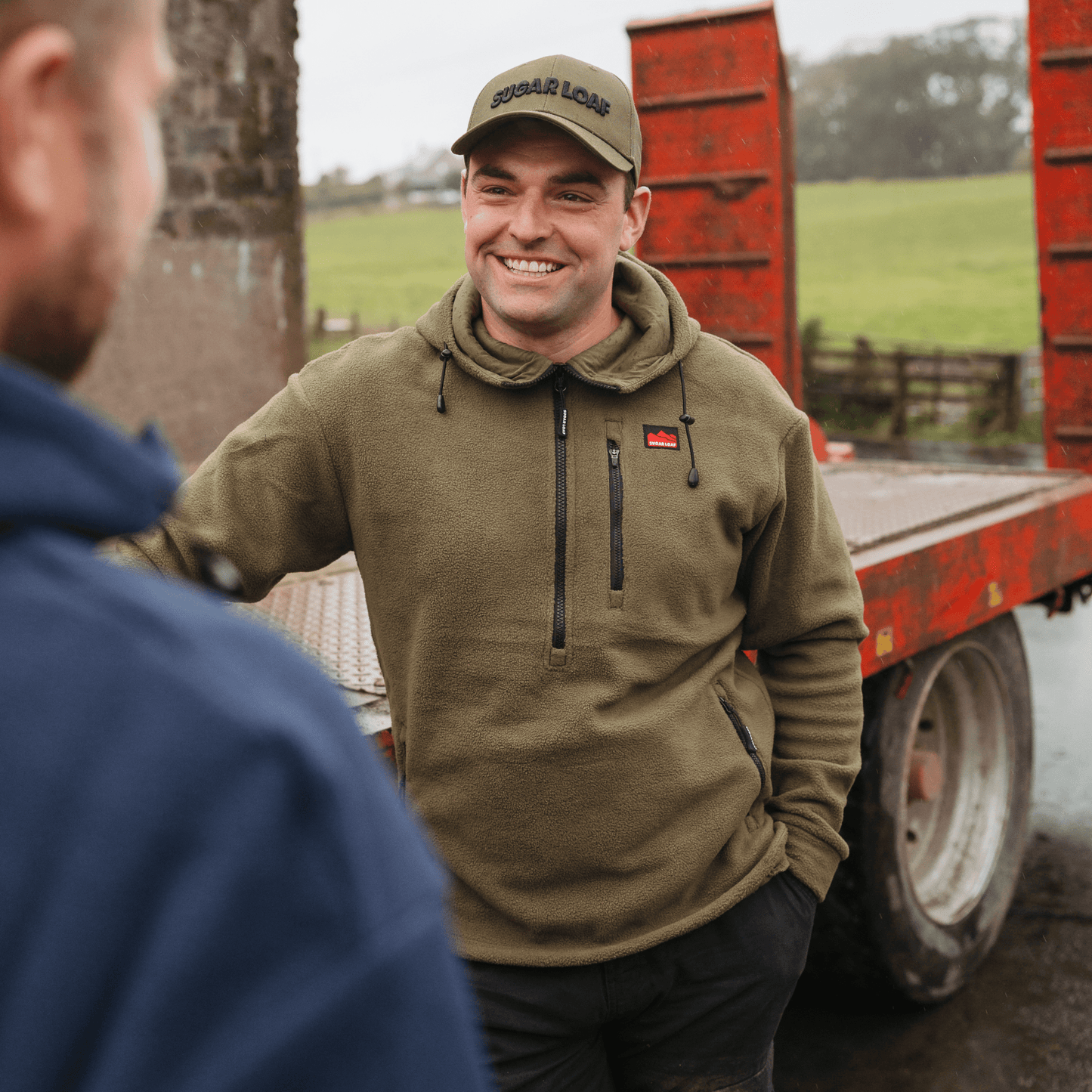
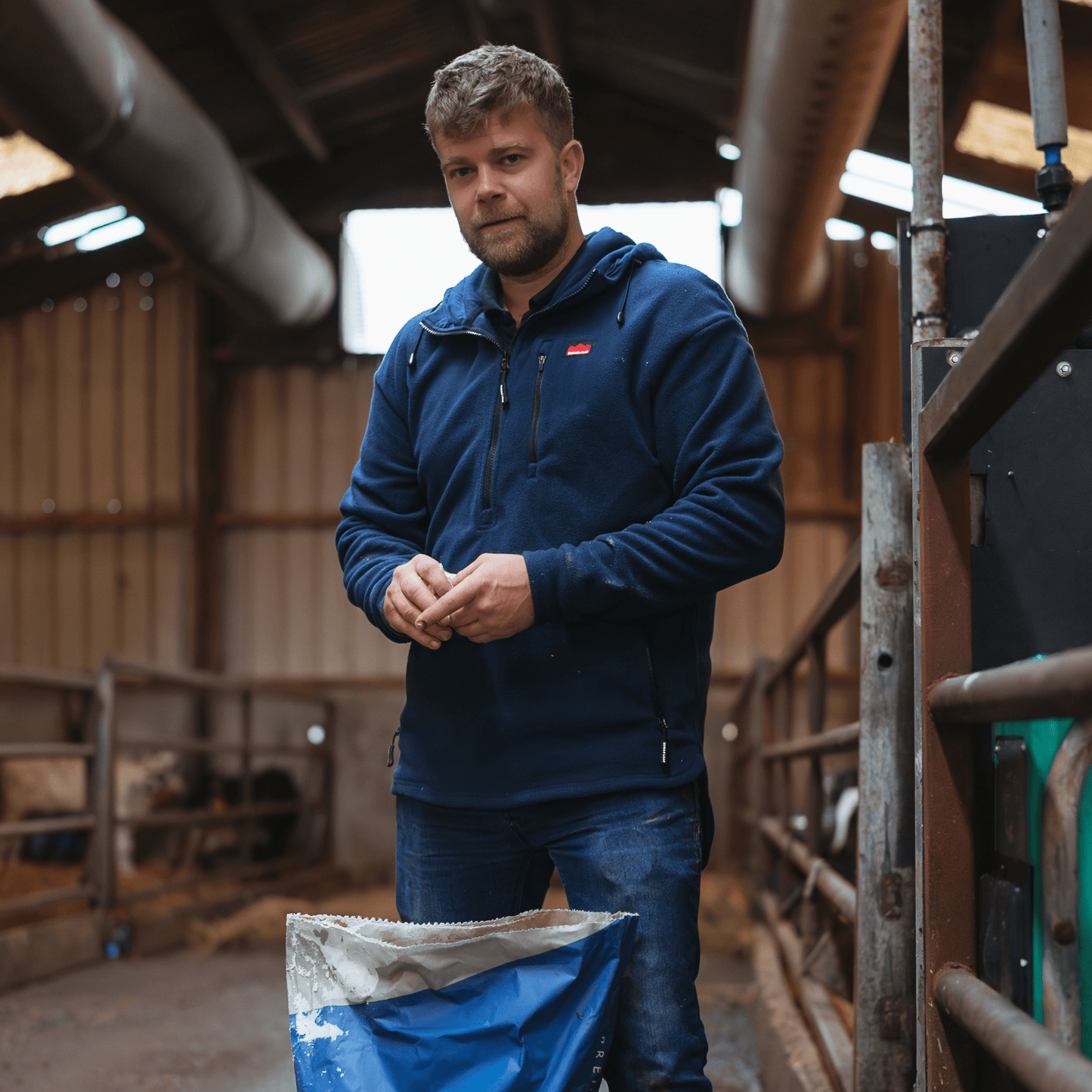
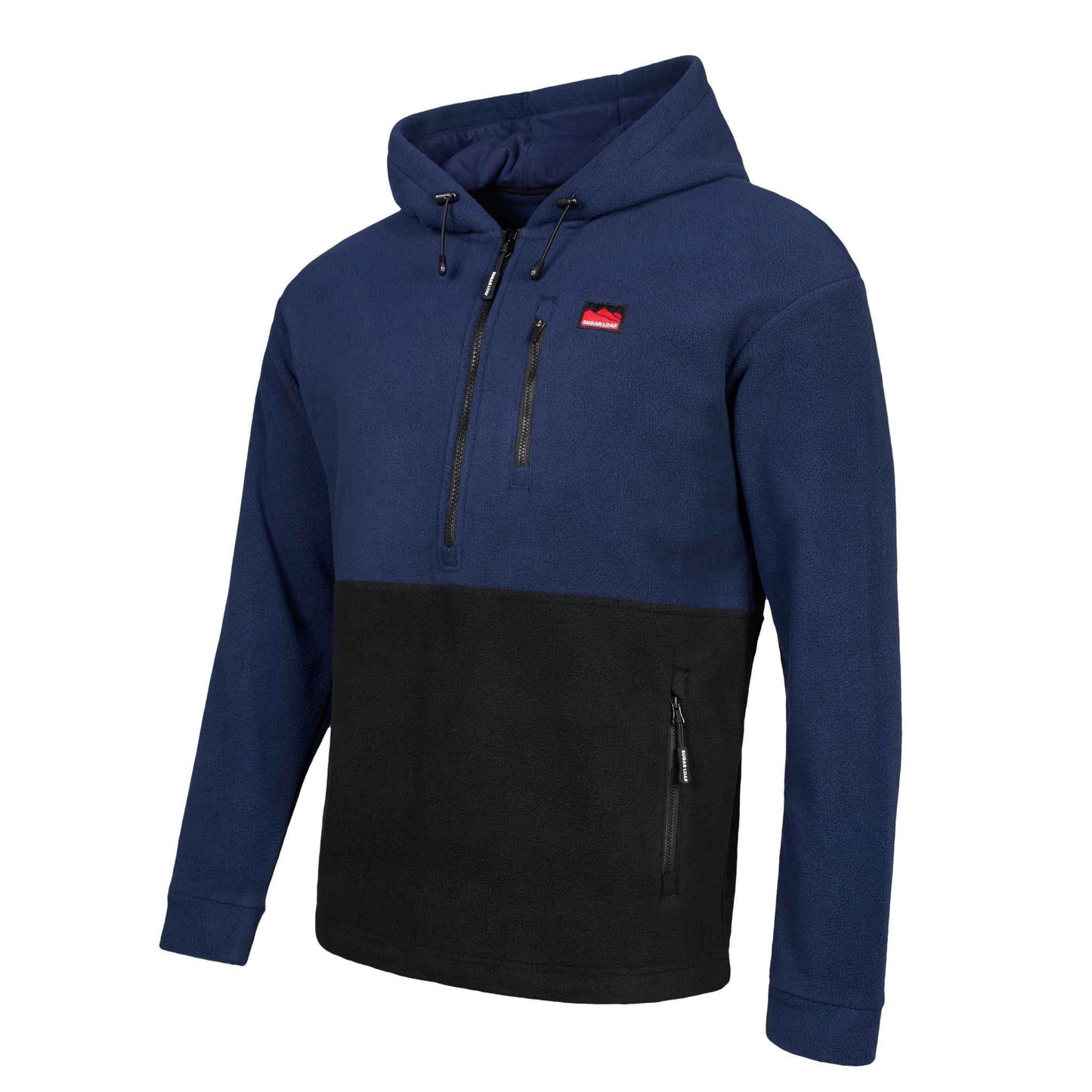
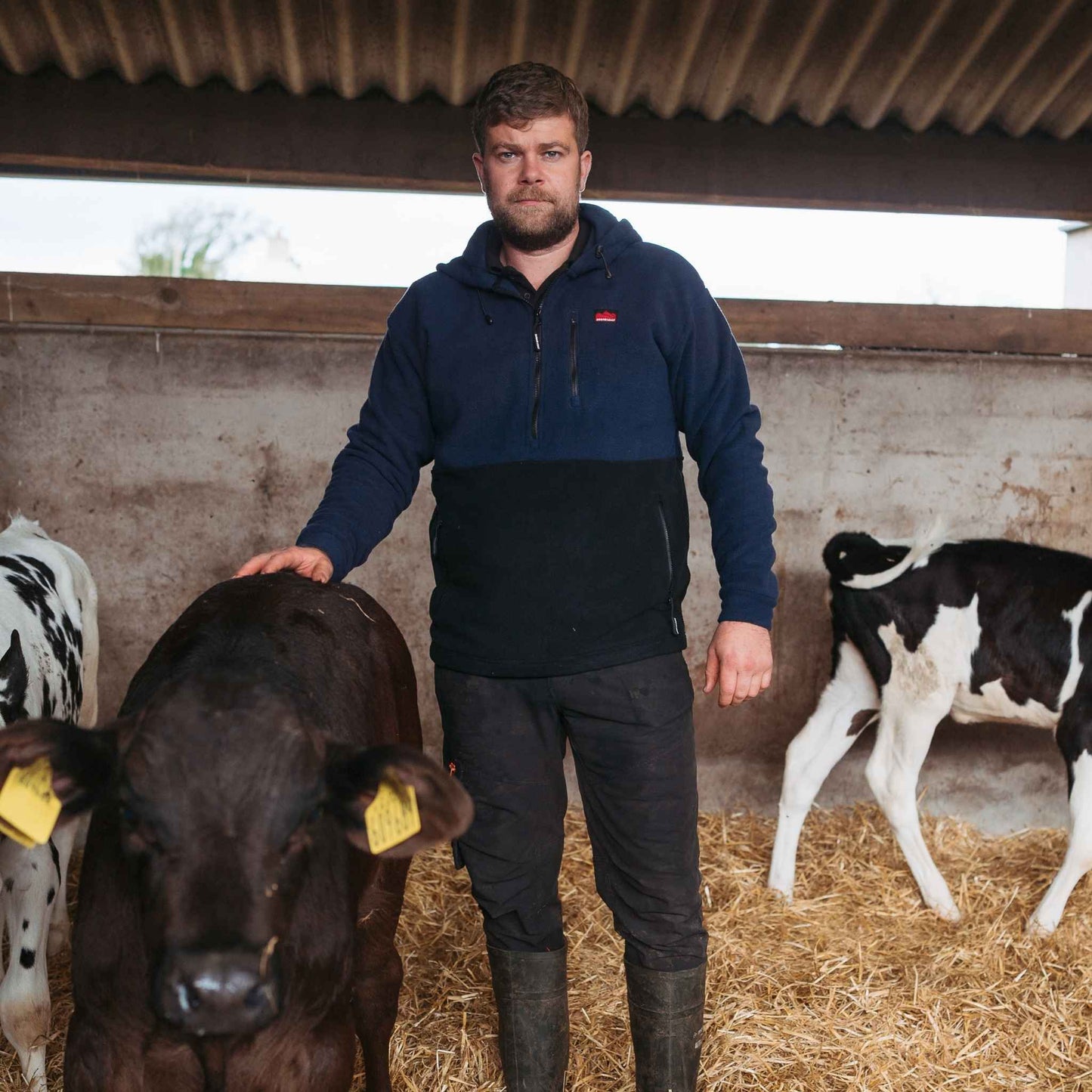
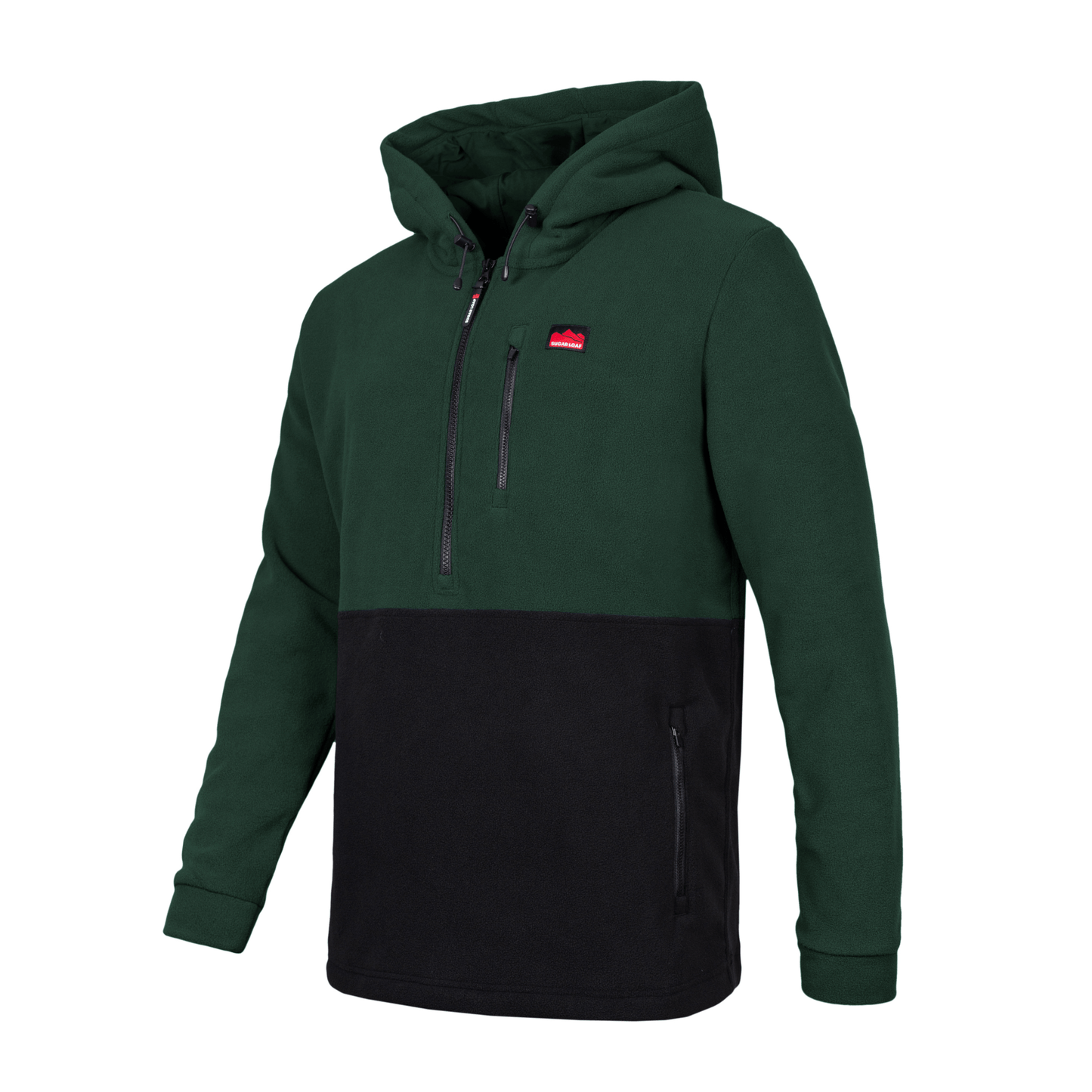
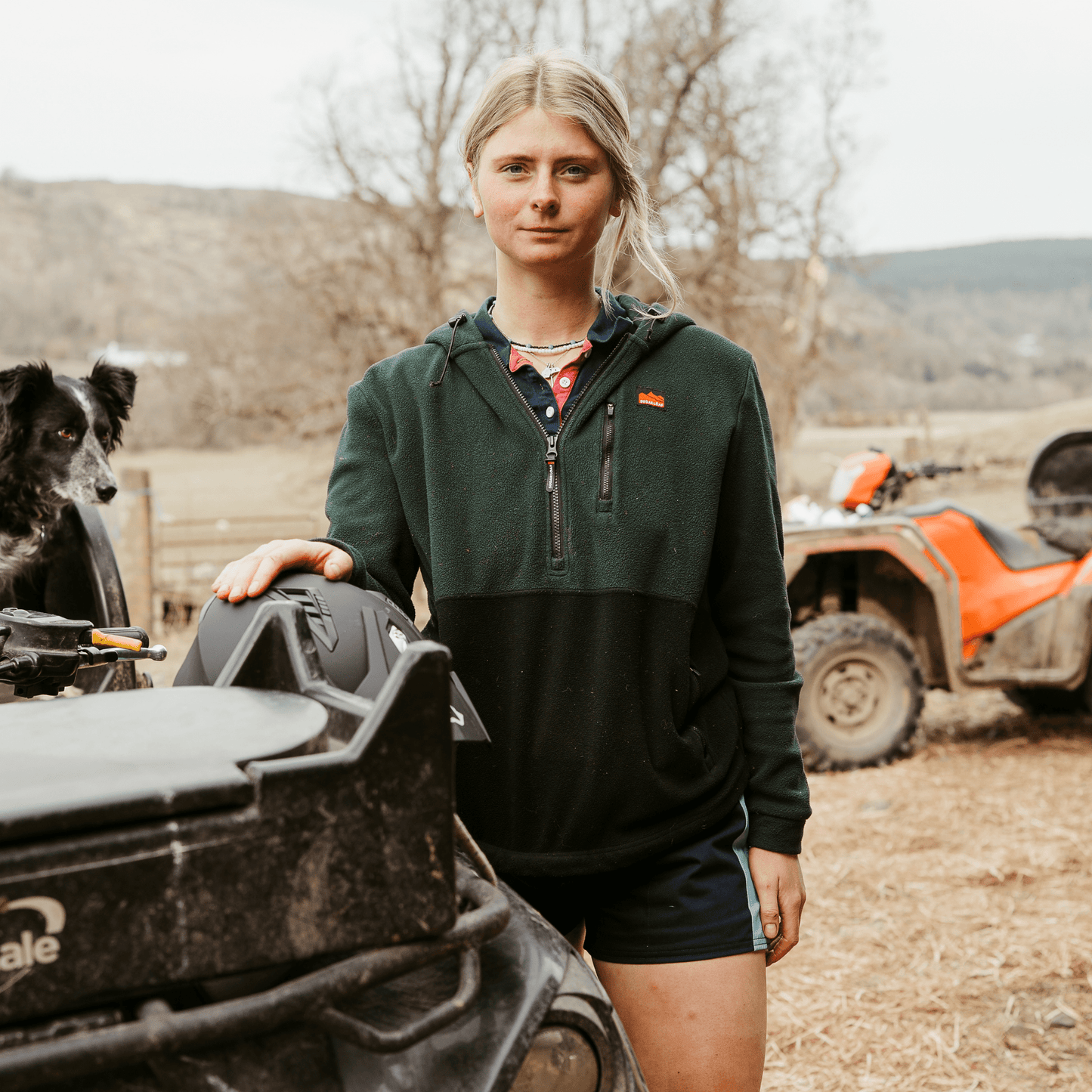
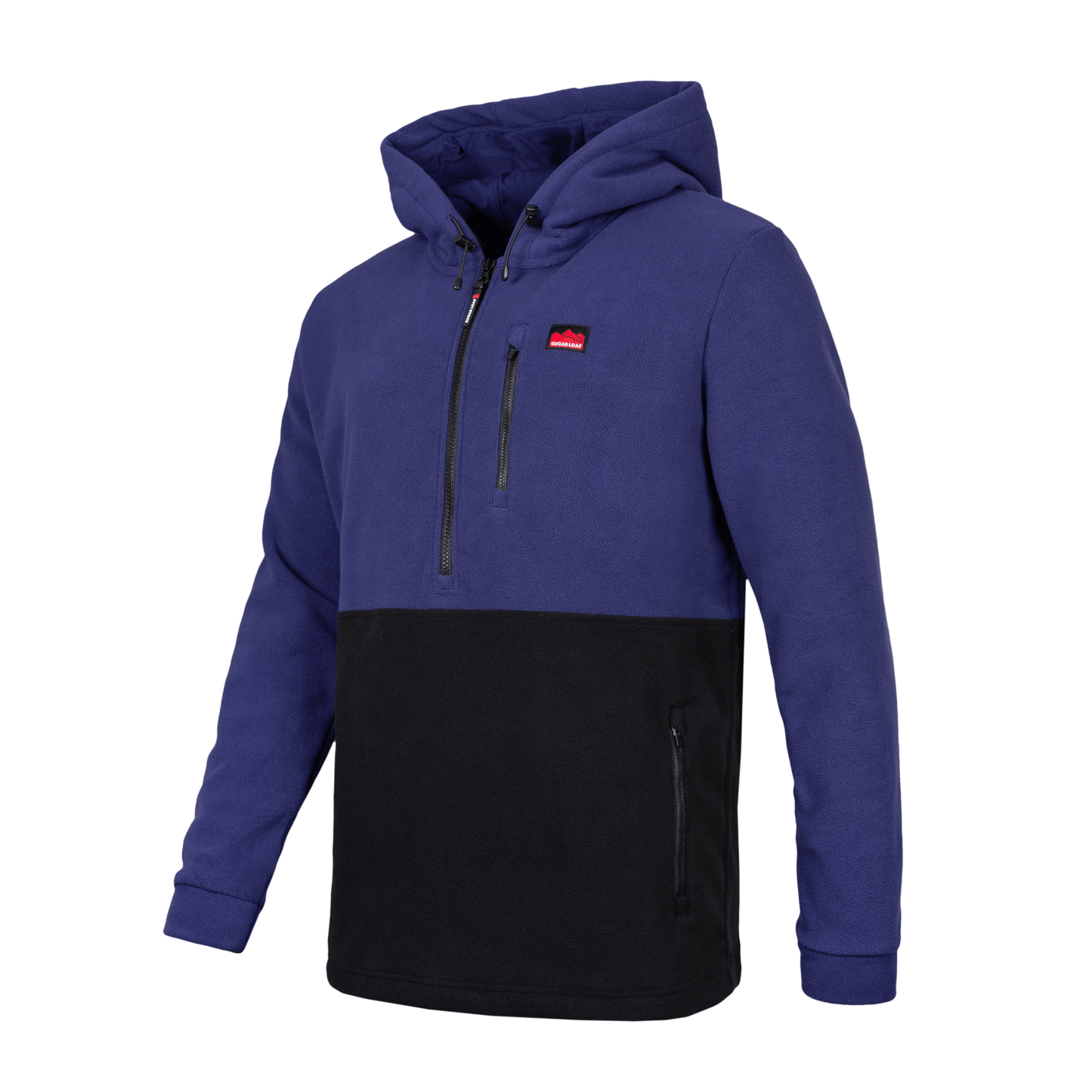
Not many clothing brands offer heavy-duty, durable fleeces over 280 GSM, which is exactly why we made the Sugar Loaf Shepherd Polar Fleece Hoodie, and the Sugar Loaf Fell Fleece, which come in at a whopping 300 GSM and 380 GSM respectively. Offering a tight, thick-knit of heavy polar fleece that are superior in trapping and maintaining body heat, blocking wind chill and lasting year and year, these are exceptional outer layer options.
→ Is a Heavier Fleece Always More Durable and Warmer?
Yes, and no. You can be assured a heavyweight fleece will always be more durable than any lighter weight options, but this does not guarantee it is warmer. GSM is a useful guide for warmth, but warmth also depends on fabric quality, construction and crucially, air pockets in the pile.
We recommend always choosing a polar fleece fabric to guarantee the best insulation properties.
Always Look for Polar Fleece
Polar fleece is a denser, heavier and more insulating version of fleece, made with a tighter weave and thicker pile. The tighter the pile and weave, the less wind and cold air gets through, therefore improving the insulation and ability to retain your body heat.
Always Look for Anti-Pill Fleece
If you've ever owned a fleece that quickly sprouted little balls of fabric across the surface, you'll know how frustrating pilling can be. Our Sugar Loaf Sheprherd Fleec Sugar Loaf Shepherd Polar Fleece Hoodie has an anti-pill finish, ensuring that it retains a smooth surface after repeated washing and wearing. It’s designed to be functional, long-lasting, and exceptionally warm without adding bulk.
What About Windproof Fleeces?
Some fleeces come with an additional bonded or windproof membrane in the fabric. Done well, it's a great addition: the Kaiwaka Weathershield Hoodie has a membrane bonded to the fleece, so it blocks wind without losing comfort - this is an excellent feature.
Some wind proofing features can reduce the functionality and comfort of the garment. We'd steer clear of loose, non-bonded membranes. These tend to create a 'rustling' noise when you move, which gets annoying fast, which is why we have discontinued selling garments with this particular feature.
Don't Overlook the Zip
Ever had the zip go on your favourite fleece? We know the disappointment that can bring. Look for premium Japanese YKK branded zippers, known for their durability and strength. Other branded, lesser-known zippers such as SBS are cheaper options more likely to fail under heavy use on the farm. Also, we recommend picking a zip with medium-sized zipper teeth: very fine-toothed zippers jam easily with dirt, straw, hay and silage, and then break.
→ Two additional fleece design details that matter for farmers:
- Deep dropped hem (sometimes called a long tail back): protects your lower back when you're bending, crouching, squatting and lifting.
- A robust, high collar: stops draughts creeping down your neck. The Sugar Loaf Shepherd Polar Fleece Hoodie is designed to tackle this, with a collar that connects directly to the hood and, when zipped up fully, closes just under the nose for serious cover from the elements.
Let's Recap: Key Features to Look For
- A midweight or heavyweight fleece (150-300 GSM, with 280+ for cold-weather outer layers)
- Polar fleece with an anti-pill finish
- Heavy-duty YKK zips with medium teeth
- Practical pockets
- A dropped long tail hem and a high collar
Get a thick 300 GSM anti-pill fleece with YKK zips and you're investing in something that will last season after season, year after year.
Our Top-Rated fleeces for Outdoor Farming Work
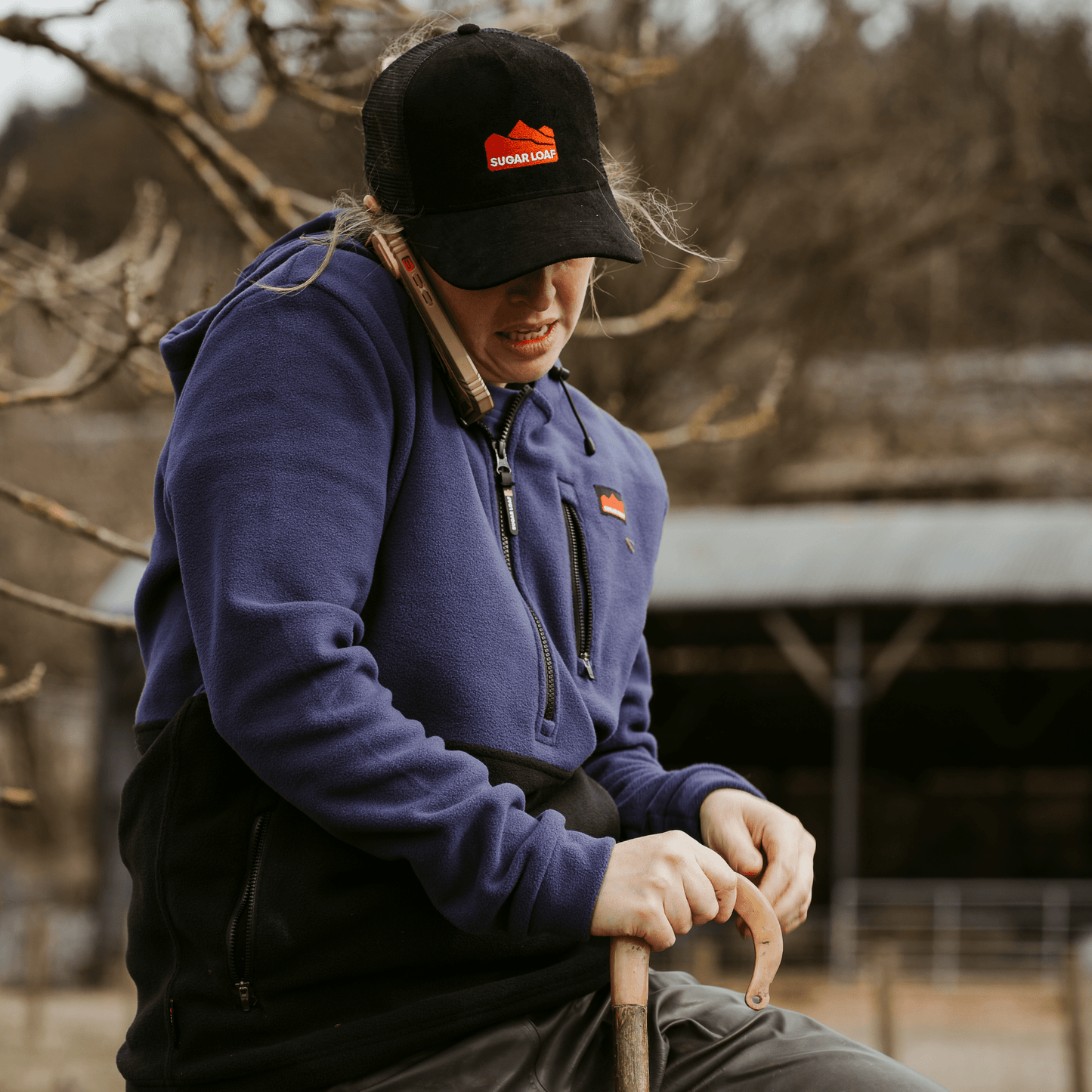
Our top-rated fleece for outdoor farming work is the Sugar Loaf Shepherd Polar Fleece Hoodie, rated 5/5 from 32 verified customer reviews after being on the market for just one year. It's a no-nonsense, hard-wearing, heavy-duty farm fleece cut from 300 GSM anti-pill polar fleece, unlined and completely quiet, with a generous fit so you can bend, reach and throw feed bags without feeling restricted.

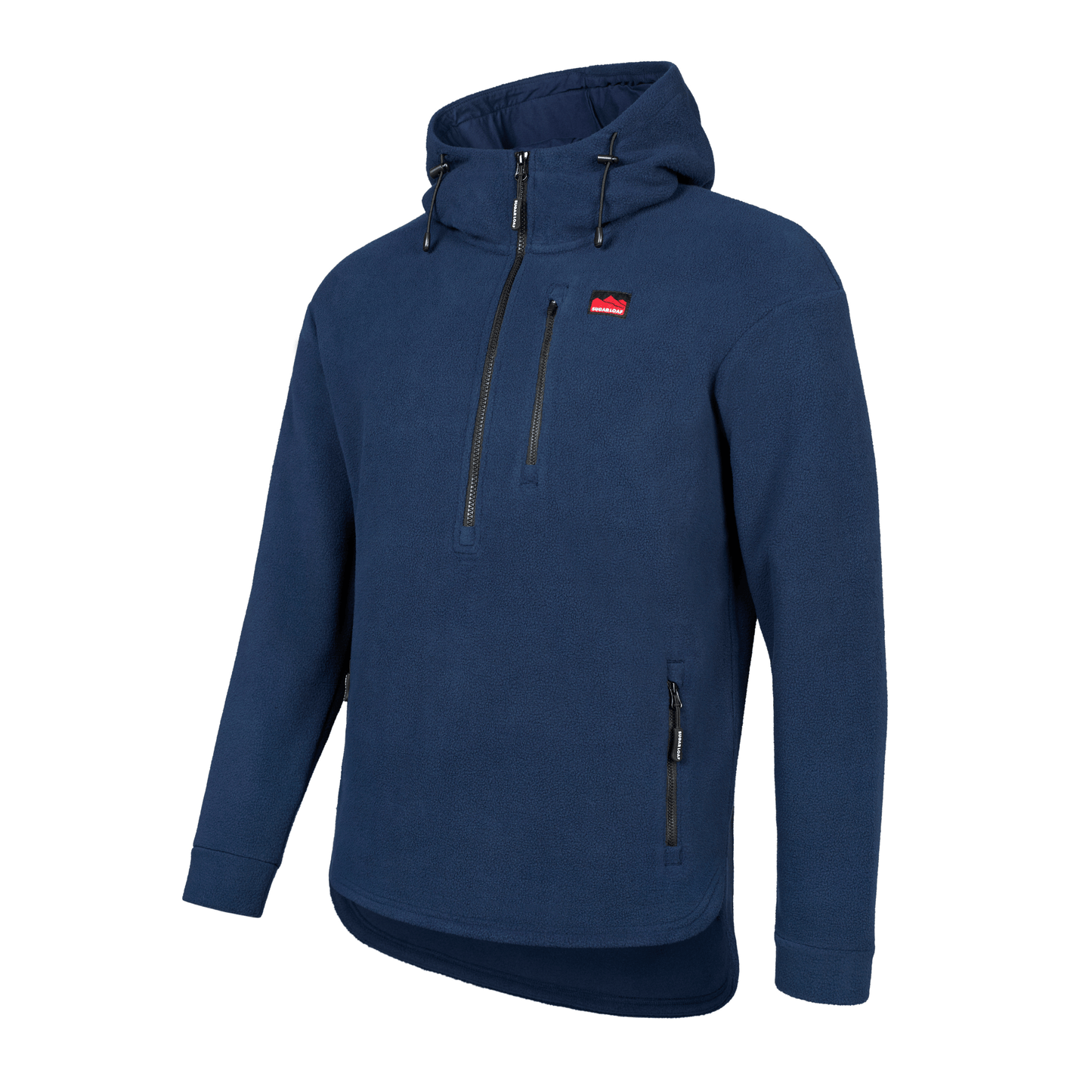
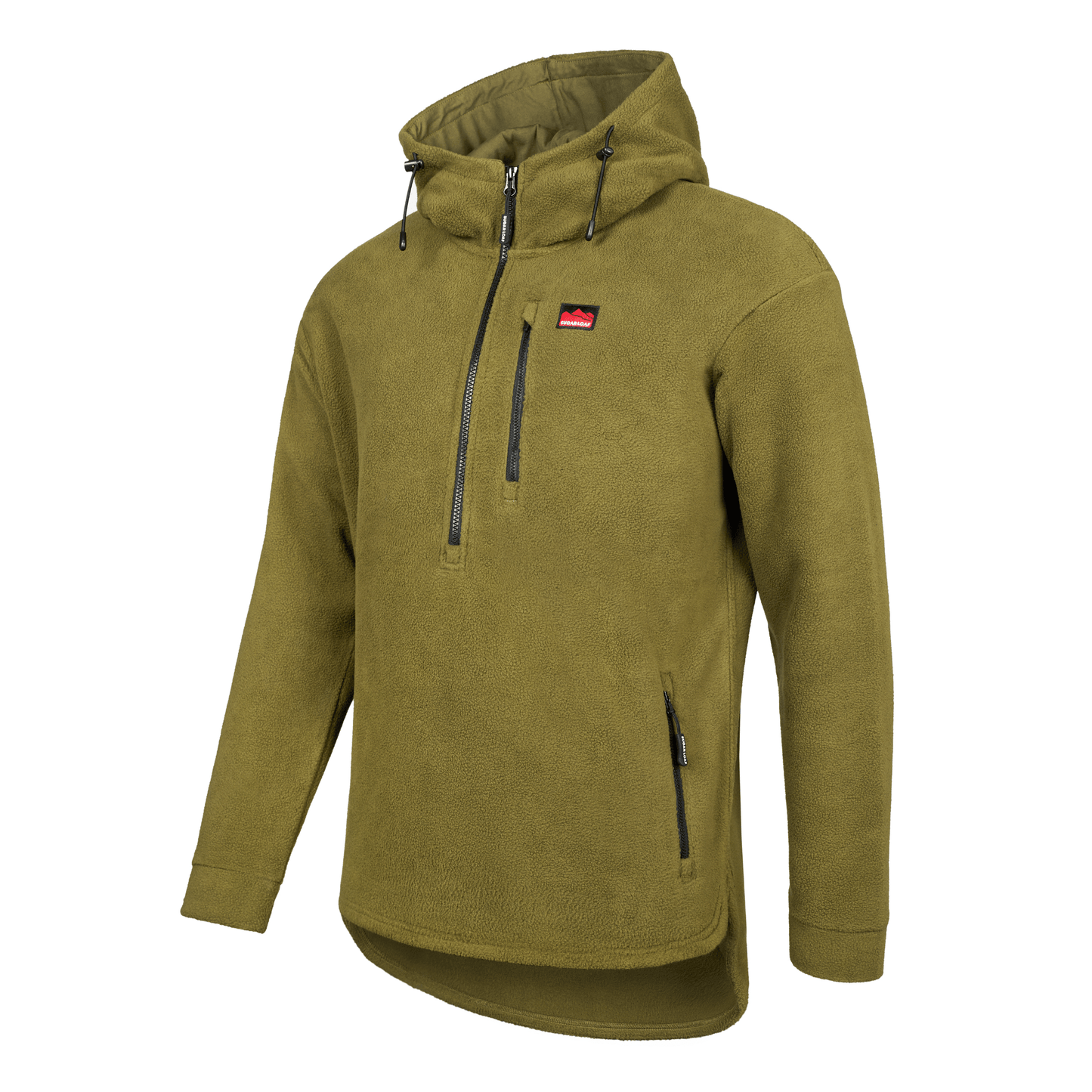
For the very cold conditions, and for those who prefer to forego a hood, the Sugar Loaf Fell Half Zip Fleece (380 GSM) is our heaviest weight garment, using a specialised Hacci polyester fabric. For wetter, windier days, the Kaiwaka Weathershield Hoodie adds a bonded windproof layer.
→ Reviews of The Shepherd fleece: Made for Farmers Working in Cold Weather
The Shepherd is our hero farm fleece, and cold-weather work is where it earns its keep. Here's what UK farmers say after a winter in it:
A Very Well Made Functional Fleece
"Design very well thought out for the highland outdoors especially for work environments mine is used in forestry, but would not hesitate to use it hill walking or to the pub as we head into the cooler months." - Robert Johnstone
Great Fit and Comfortable
"As a contract fencer I like to have a comfy, warm jumper/jacket with a long back to keep the cold wind out. I thought it was a sensible price as well." - Joe Northwood
The Best Polar Fleece Hoodie by Far!
"Where to begin? Delivery was spot on and super-quick. The fleece is just lovely, SO warm and comfortable. I bought it ready for a trip to Mull in September and cannot wait to put it to the test. Perfect fit. Perfect quality." - Jane Baxter